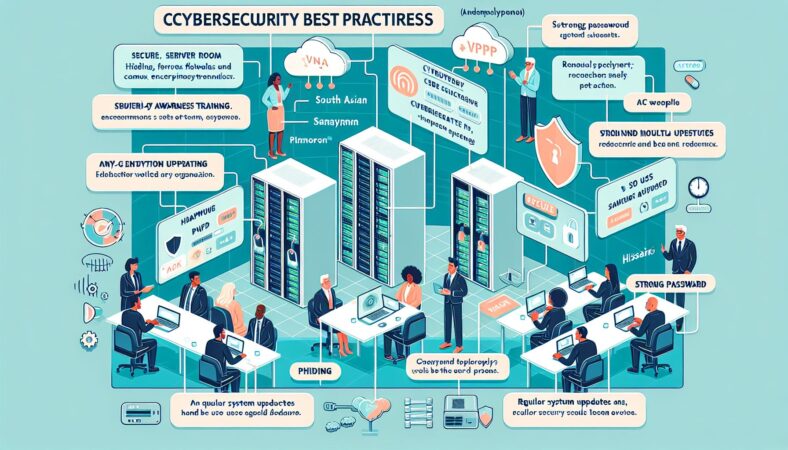
In today’s digital world, safeguarding sensitive information is crucial. Every organization must implement strong cybersecurity measures. Following cybersecurity best practices can help protect data and maintain trust. Here, we will outline key practices every organization should adopt.
1. Educate Employees on Cybersecurity
Employees play a significant role in an organization’s cybersecurity. Knowledge is the first line of defense. Conduct regular training sessions on:
- Identifying phishing emails: Teach employees to spot suspicious emails and links.
- Using strong passwords: Encourage the use of unique, complex passwords for different accounts.
- Social engineering tactics: Explain techniques that cybercriminals use to manipulate people.
Ongoing education helps create a culture of security awareness.
2. Implement Strong Password Policies
Creating and enforcing strong password policies is vital for cybersecurity. The following practices can enhance password security:
- Use complex passwords: A strong password should contain at least 12 characters, including letters, numbers, and symbols.
- Enforce regular password changes: Require employees to update passwords every three to six months.
- Implement multi-factor authentication (MFA): MFA adds an extra layer of security by requiring additional verification, such as a text message code.
Strong password policies reduce the risk of unauthorized access.
3. Keep Software Up to Date
Outdated software can expose organizations to cybersecurity risks. Regular updates provide essential security patches and features. Here’s what to do:
- Schedule automatic updates: Enable automatic updates for applications and operating systems.
- Track third-party software: Ensure that all third-party applications are also updated.
Keeping software current helps prevent attackers from exploiting vulnerabilities.
4. Secure Your Network
A secure network is essential for protecting information. Organizations should take these steps to enhance network security:
- Use firewalls: Implement hardware and software firewalls to block unauthorized access.
- Create a Virtual Private Network (VPN): A VPN encrypts internet traffic, making it safer for remote work.
- Segment networks: Divide networks into smaller segments to limit access to sensitive data.
These measures reduce the risk of potential breaches.
5. Regularly Back Up Data
Data loss can result from cyberattacks, hardware failures, or natural disasters. Regular data backups can mitigate this risk. Here are best practices for data backup:
- Schedule automatic backups: Set up automatic backups daily or weekly, depending on data importance.
- Use multiple storage solutions: Store backups in both cloud solutions and physical drives.
- Test the backups: Periodically test backups to ensure data can be restored.
Regular backups ensure access to critical information even during crises.
6. Create an Incident Response Plan
An incident response plan outlines roles and actions during a cybersecurity breach. Organizations should:
- Define team roles: Assign specific roles to team members for quick response.
- Establish communication protocols: Determine how to communicate internally and externally during an incident.
- Review and update the plan: Regularly assess and improve the incident response plan.
Having a clear plan enables an effective response to minimize damage.
7. Control Access to Sensitive Information
Limiting access to sensitive data is a key cybersecurity practice. Organizations should:
- Implement the principle of least privilege: Give employees access to only the information they need for their work.
- Use role-based access controls: Assign access based on job roles and responsibilities.
- Review access regularly: Conduct periodic audits of user access to ensure compliance.
Controlling access helps reduce the likelihood of internal threats.
8. Monitor and Audit Systems Regularly
Regular monitoring and auditing of systems can help organizations detect threats early. Here are essential practices:
- Use intrusion detection systems (IDS): IDS can alert you to suspicious activity in networks.
- Conduct regular security audits: Schedule audits to assess security measures and compliance.
- Analyze logs frequently: Review system logs to identify unusual activities.
Regular monitoring enhances overall security posture.
9. Encrypt Sensitive Data
Encryption transforms sensitive information into unreadable formats. This practice is crucial for protecting data. Organizations should:
- Encrypt stored data: Use encryption for files on servers and cloud storage.
- Use transport layer security (TLS): Secure data in transit with TLS protocols during transfers.
- Apply encryption policies: Establish clear guidelines for encrypting data.
Encryption reduces the risk of data exposure, even if a breach occurs.
10. Engage with Cybersecurity Experts
Expertise in cybersecurity can significantly enhance an organization’s security. Consider these options:
- Hire specific security teams: Employ dedicated cybersecurity personnel.
- Consult with security firms: Work with third-party experts to assess vulnerabilities.
- Participate in information-sharing forums: Engage in forums where organizations share insights on threats and solutions.
Collaboration with experts can provide valuable insights and protective measures.
Benefits of Following Cybersecurity Best Practices
Adopting cybersecurity best practices provides numerous advantages:
- Reduces data breaches: Effective measures keep sensitive data safe from hackers.
- Enhances trust: Demonstrating commitment to security builds customer confidence.
- Ensures business continuity: Prepared organizations can respond effectively to incidents, ensuring ongoing operations.
- Meets compliance requirements: Many industries require specific cybersecurity standards. Following best practices helps achieve compliance.
Challenges in Implementing Cybersecurity Best Practices
While these practices are essential, organizations may face challenges:
- Resource limitations: Smaller organizations may struggle to allocate necessary funds for cybersecurity.
- Employee resistance: Some employees may resist new security measures, requiring effective change management.
- Rapidly changing technology: Keeping up with new security trends can be overwhelming.
Addressing these challenges is crucial for effectively implementing cybersecurity measures.
Conclusion
Cybersecurity best practices are vital for every organization. Educating employees, enforcing strong password policies, and keeping systems updated are just a few steps to enhance security. By implementing these practices, organizations reduce the risk of threats and protect sensitive information. Take proactive measures to foster a safe and secure environment for data and trust.